This week, Mark Zuckerberg published a 6,500-word manifesto about a future powered by personal superintelligence: AI agents for your health, your finances, and your relationships, running on data centers the size of small cities. A shorter version had run in the Wall Street Journal two weeks earlier. The reaction was skeptical, and even people who like AI called it out of touch with how the technology is actually used. If you run an aggregates operation, a soil and mulch yard, or a demolition and recycling business, it is fair to ask what any of this has to do with the work in front of you. The short answer: you do not need superintelligence to run your yard. You need to know how many tons are in that pile today. That kind of AI is already here, quietly, in the hands of operators on bulk materials job sites across the world.
The AI that matters here is already working
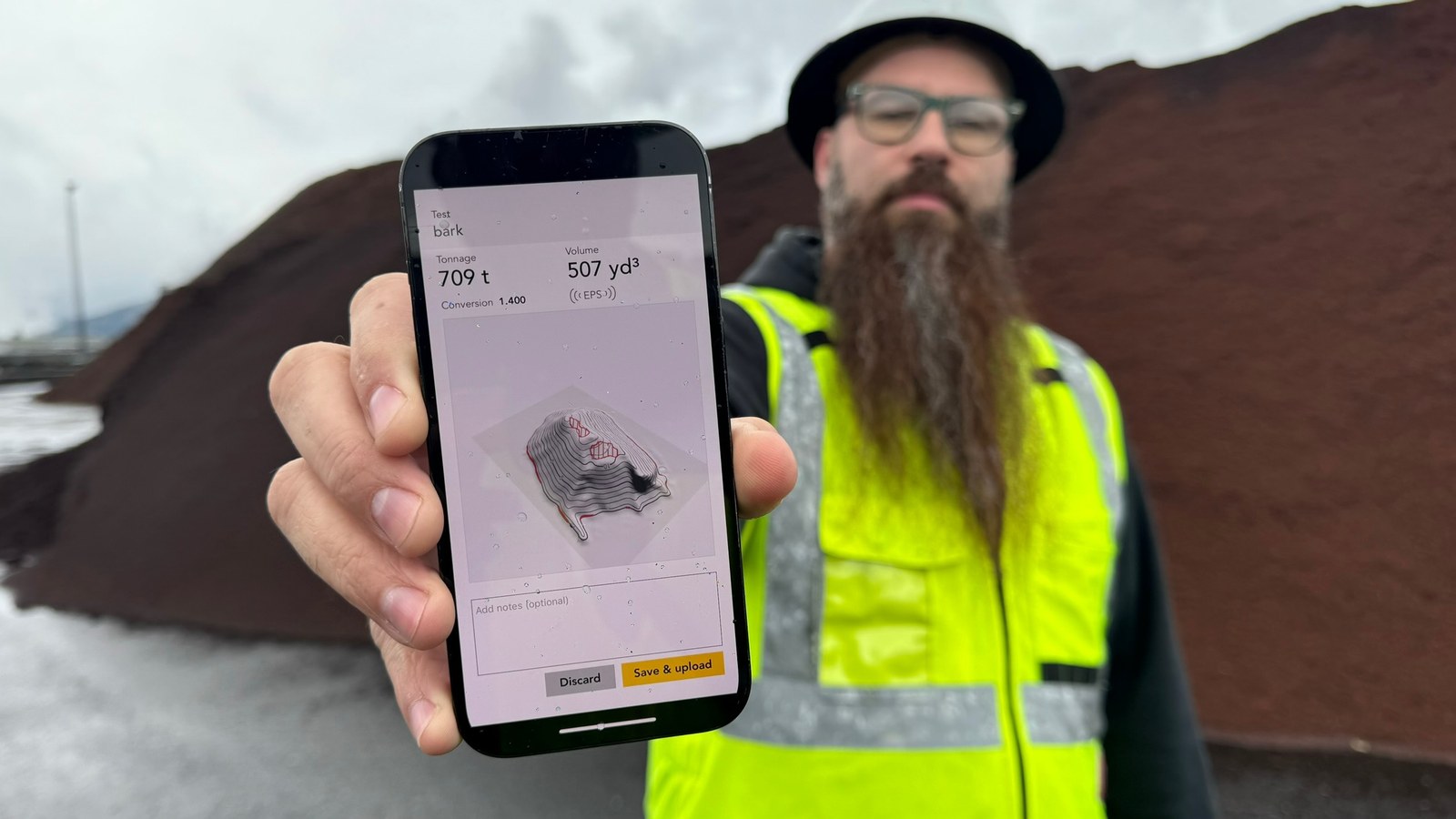
The AI in the headlines is not the AI that helps a bulk materials business. The one that does is Physical AI, and if your team uses Stockpile Reports® you are already using it. This is not new or experimental. Stockpile Reports has been measuring piles from imagery captured on a phone, drone, or installed camera since 2012, across hundreds of thousands of distinct stockpiles. No superintelligence. No data center. No large purchase order. You are also already holding the authoring layer for bulk materials: the moment physical reality becomes data, before anyone opens software to write it down. It is the thing the big platforms are racing to own, and in this industry you have it today.
The real risk is not runaway AI. It is stale data.
The fear in the headlines is a machine that gets out of control. The risk on your site is quieter and more expensive: running the business on numbers that are weeks or months old. An estimate. A count walked off by eye. A survey from last quarter. Every load you ship, every reorder you place, and every year-end figure rests on data that may no longer be true. That is the exposure worth worrying about, and it is one you can close now.
“Nobody running a materials yard is up at night worrying about a superintelligent takeover. They are up worrying about shipping against a number that was true three months ago. The hard part of this business has always been knowing what you actually have on the ground, and that is a problem you can fix today with tools your team already has in its pocket. It does not take a data center or a big budget. It takes a measured number rather than an estimate, and the discipline to run on it.”
David Boardman, Founder and CEO, EveryPoint
What better tools already do
Superintelligence is a moonshot. Running your yard is not. You need everyday decisions based on facts instead of guesses. A measured number lifts the tasks your team already spends time on:
- Inventory and write-offs. Unexpected write-offs will reduce dramatically when the count is independently and objectively measured, not estimated.
- Delivery disputes. Prove what left the yard, and verify what came in so you are not shortchanged. A single dispute is costly in product, trucking, and labor to redeliver or resolve.
- Production monitoring. Know what you have today, not what you had last quarter.
- Demand planning. Set reorder points on real levels, and avoid both stock-outs and piles of material you cannot move.
- Logistics and dispatch. Send trucks against measured facts, not a stale spreadsheet.
Any employee can walk a pile and return a measured number in a few minutes.
A scan does not have to wait for a connection
A phone scan can be reconstructed by the engine on the phone itself, so a crew at a remote site is not waiting on a connection to get a number. Aerial and installed camera imagery is processed on our servers, where the heavier reconstruction belongs.
One number, across the whole operation
The payoff grows when everyone works from the same measurement. When inventory, demand planning, and dispatch all run on the same measured number, decisions get made on measured facts, not on whoever’s spreadsheet is freshest. This is the practical shape of what people are starting to call the agentic supply chain: your own systems, and the AI assistants your team is beginning to use, asking a question of the measured number and acting on the answer. It is not science fiction. It requires a number you can trust underneath it.
The bottom line
You do not have to wait for superintelligence or write a large check to put AI to work. The AI that helps a bulk materials business is already here. It runs on an iPhone. And it does one hard thing very well: it tells you the truth about what is on the ground. That is the foundation every good decision is built on. Stockpile Reports, powered by EveryPoint®’s Physical AI, is built to give you that foundation, and to be a guide to what AI does, and does not, mean for bulk materials. Start with the pile.
Every Pile, Any Time®