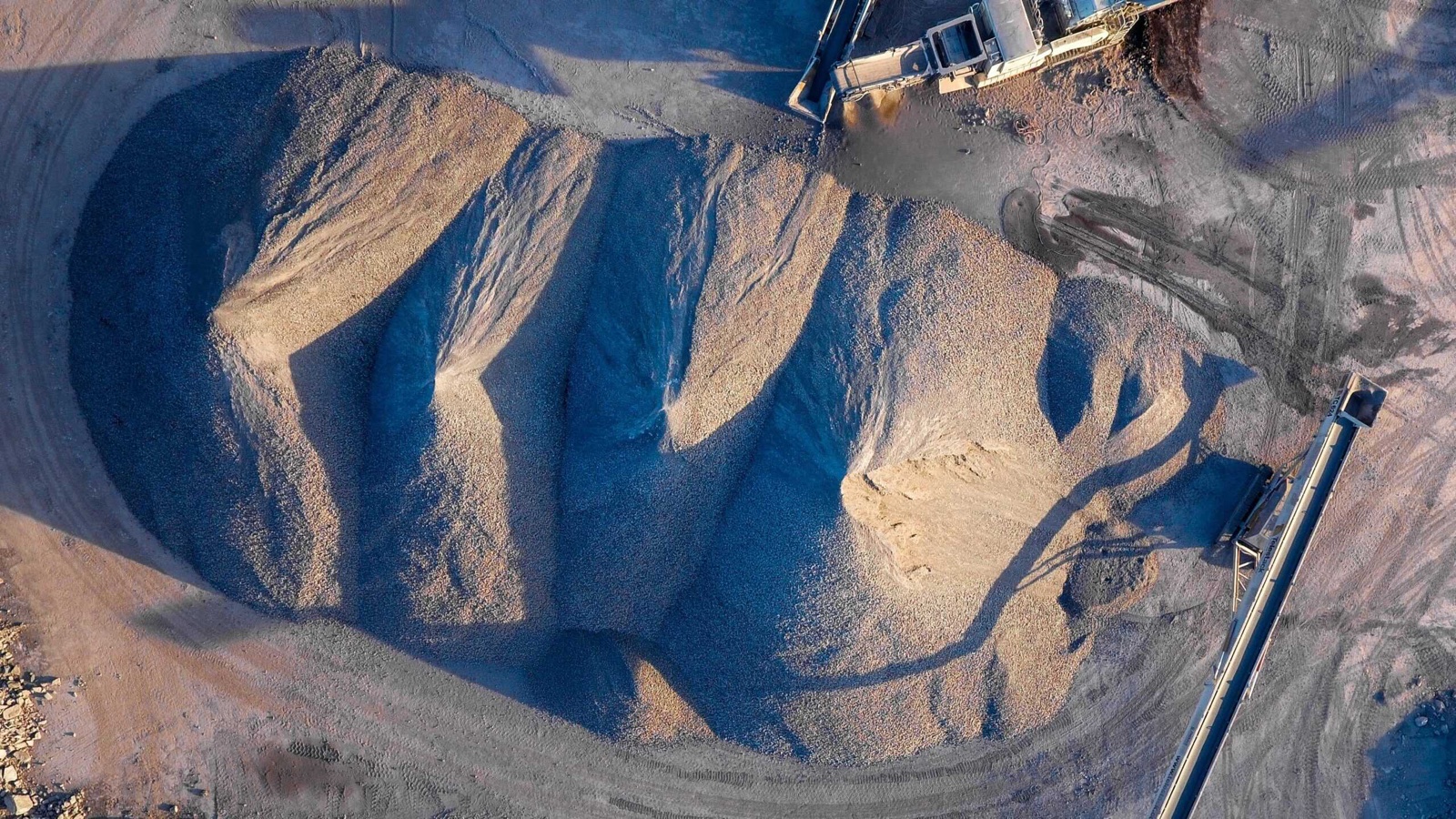
Month end arrives and the value of the pile on the financial statements doesn't look right. Operations says nothing moved. Accounting sees an unexplained variance. The CFO asks what the number should be, and nobody is sure when the pile was last measured, who measured it, or where that record lives.
That moment needs more than a number. It needs a record: what was measured, when, how, by whom, and the measured value at that time.
Stockpile Reports® keeps that record for every measurement. Connect it to your AI assistant and you can simply ask for the measurements you need today. Here are the questions worth asking before the books close.
What the measurement record holds
Each measurement records the volume measured from the pile, and its tonnage wherever a conversion factor is set.
Each measurement also carries the context a month-end reviewer needs to validate the financial statement value: the measurement date, who measured it, the method (an iPhone scan with SR Measure®, a drone flight, an installed camera, or a visual estimate or manual entry), the conversion factor used, and any images supporting the measurement.
Coverage confidence, high, medium or low, comes with every measurement Stockpile Reports computes from imagery: a surface score, and a toe score wherever the pile has an open base. A walking-wheel figure or a visual estimate you enter yourself carries none, because we did not compute it.
The volume is measured, not asserted, and the factor that turns it into tons is versioned. Your reported tonnage can be taken apart and checked. A change to a conversion factor applies only to measurements taken after it, and on Business 200+, role-based access controls let you limit that change to your administrators.
Six questions to ask before the close
Ask these in your AI assistant once your Stockpile Reports account is connected. Swap in your own site, pile and product names.
1. "What is the latest measurement for each pile at [site], and when was it measured?"
Start here. The current measurement status gives Operations and Finance the same list to work from: each pile, its most recent volume and tonnage, and the measurement date. Everyone is looking at the same number from the same record, instead of a stale spreadsheet.
2. "Which piles have not been measured since the first of the month?"
This is the question that focuses your next steps. Your assistant reports each pile's most recent measurement, so a pile last measured three weeks ago shows a three-week-old number. Ask the week before close and you know where to send a crew, rather than finding out after.
3. "What is the total tonnage of [product] across all my sites, using each pile's most recent measurement?"
The phrase "most recent measurement" matters. A pile is measured again and again over time, and adding up its past readings counts the same material twice. Asking for the latest reading per pile gives you a total that means something. Tonnage exists only where a conversion factor is set, so add "and list any pile without a conversion factor" to the question. Then you can see what the total leaves out.
4. "How has the volume of [pile] changed since last month's measurement?"
A comparison of two dated measurements shows how much the pile changed and over what period. It does not show why. Sales, transfers, production and shrink all live in other systems, so treat the change as the question to take to those records, not the answer.
5. "Which of this month's measurements have low surface coverage confidence?"
A low score means the capture did not cover the pile as completely as it could have. The financial statements need reliable numbers, so it is worth knowing which piles to review more closely, or to measure again.
6. "Who captured the measurement for [pile] on [date], and can I see the images?"
When pile variances show up and the questions start, the reconciliation moves faster with the measurement history in front of everyone. The assistant can bring back who measured the pile, how, and any images saved with that measurement.
What it can't do
It is worth being clear about the limits of Stockpile Reports in your AI assistant, because they are the difference between a useful answer and a confident wrong one.
It reports measurements, not a live gauge. Every answer is the latest available measurement, with its date. Freshness is something you manage, which is why question 2 is on the list.
It does not know your prices, costs or sales. Stockpile Reports holds volumes, weights and conversion factors. If you want a dollar value, give the assistant your unit cost and it can do the arithmetic on the measured tonnage. The tonnage comes from your measurements; the cost comes from your own records.
It does not explain a variance on its own. It can show you that a pile changed between two measurements. Why it changed depends on dispatch, shipping, loading scale and production records that sit elsewhere.
It sees what you see. The AI assistant connects to your Stockpile Reports login, so it has the same access you do and no more. If your account is organized by region or division, the answers only cover the sites you can see.
How to connect
Stockpile Reports in your AI assistant is available to every group account with a Business subscription. Any active user in a group account can connect. There is no separate signup, approval, or access request. It is included with your Business subscription, and there is no add-on to buy.
Setup takes a few minutes. You add Stockpile Reports as a connector in Claude, ChatGPT, Gemini or Microsoft Copilot, paste in the connection address, and sign in with your Stockpile Reports email and password. The step-by-step guide for each assistant is at stockpilereports.ai/connect.html.
New to the idea of an assistant reading your measurements? Physical AI 101 explains how the connection works, including the open standard behind it, the Model Context Protocol (MCP).
Not on a Business subscription? Talk to us about moving to Business.
The short version
Aggregates producers, ready-mix and asphalt plants, DOT maintenance yards, landscape suppliers and recyclers all close the month the same way: someone has to stand behind the value attributed to a pile, whether volume or tonnage. Measure the material. Keep the record. Then let everyone who needs the answer ask for it.
Every Pile, Any Time®